Sunday, November 13, 2011

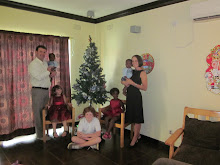
And now we are seven...

Soooo.  Kenneth.  I am sorry that I have not written sooner.  It has been a confusing, emotional, exhausting month.  Kenneth stayed with us for almost three weeks, and he grew at a rapid pace.  Within a week he had cheeks you could pinch, and after two weeks he almost looked like he had buttocks.  He was a voracious and demanding consumer of formula, finishing a can every 2 days, and reluctantly finishing the sachets of high-calorie Chiponde we forced on him each day (he was not a fan). Within 14 days he gained 50% of his original body weight, going from 3.8 kg to 5.5 kg.  This is the equivalent of Dave gaining 100 lbs in two weeks.   He became stronger and more interactive, and eventually was able to put objects in his mouth and push his little head off the blanket when laid on his belly.  A favorite activity of his was grabbing the sides of my face with both hands and pulling me down to give me sloppy, open-mouthed kisses on the cheek or suck on my chin.
Unfortunately, his perpetual demand for nutrition was not limited to daytime, and Kenneth would wake to take a bottle every 45 minutes to 2 hours, sometimes drinking 20 ounces overnight.  Dave and I developed a system where one of us would sleep in bed with Kenneth and essentially pull an all-nighter, and the other would sleep in a different room and recover from the night before.  It felt like having a newborn at home, but without the maternity leave, while living in a developing country where NOTHING happens easily except sunburns.  We became sleep-deprived, bleary-eyed strangers to each other.  I became very emotionally labile, deciding one afternoon as I trudged home from work on foot in the searing late-afternoon sun, that I no longer wanted to save the world.  I wanted to shop at Target, and go to the movies, and play with my nephews, and take a bath in my beautiful two-person bathtub in North Carolina.  I wanted to run on a treadmill in an air-conditioned gym, and eat peanut butter frozen yogurt, and go for coffee with my mom.  Dave, who became increasingly befuddled but never complained, took the challenge in stride.  The children seemed mostly to enjoy having the baby around, and Malawi proved to be a motherly, doting, reliable little caregiver to him.  Aine would exclaim “Oh I just love him!”, then run off to play with the neighbors.  Eamonn was indifferent at best, and desperate with anxiety at worst, repeatedly begging us not to adopt him.
The backdrop to this dramatic change in our lives was life in Malawi. Grocery shopping literally requires visits to between 5 and 7 different stores in order to buy the routine necessary items, we are both working full-time jobs in busy  facilities with extremely ill patients and few resources, and there has been a severe petrol shortage for weeks.  You never realize how completely dependent you are on cars until someone tells you there will be no gas deliveries to your city for 3 weeks.  Lines at the stations begin with the rumor of fuel delivery, develop within minutes, and can last hours, often ending in disappointment and sometimes bloodshed (no deaths, but some arrests).  Fuel, where to find it, how much it costs on the black market, and how much is left in the tank are constant topics of conversation.  We have become the proud owners of 4-5 jerry cans, dispersed hopefully throughout the city with people who can possibly purchase gasoline for us.  Dave has become proficient at siphoning fuel into the tank.  At the same time that we have had to walk/run to work more frequently, it has become hotter.  By the time I arrive at Baylor each morning my back is soaked in sweat and my face is covered in a layer of perspiration and grime.  For the first time since we arrived, exhausted, hot, and overwhelmed, I wanted to go home.
The situation was not sustainable, and I began to search for a plan.  We had intended to go to the village about 10 days after Kenneth came to our house, but our empty gas tank forced us to put the visit off for another week.  We had finally procured enough petrol from our neighbor that we could drive the hour on dirt roads into the village with Mrs. Chisala, the wise social worker for the Baylor clinic.  Malawi insisted on coming, and Martha the nanny held the baby while I drove.  The directions I made fun of in the last post (left at papaya tree, right at the bigger dirt road) were now the ones I was using to find my way back to Kenneth’s home.  We made a few wrong turns, but eventually arrived at the small grouping of thatch and mud huts, and a large and rapidly-growing crowd of relatives.  Again, we assembled on the bamboo mat, and again I individually greeted each of the adults with a handshake as the family passed the baby around, admiring his weight gain.  I tried to discern if he recognized the people who surrounded him as he stared at them with wide eyes, but I could not.  Again, I was asked to take his twin brother Innocent, and this time I was quick to agree.  He looked terrible.  He was now smaller than Kenneth, and he was limp in the arms of an auntie, unable to lift his head, his cry weak.  Upon further questioning, we learned that the baby had been drinking cow’s milk, diluted with well-water and mixed with sugar.  He was being supervised by his 15 year-old sister and his ancient, kyphotic “go-go”.  As a group, and surrounded by a gaping mass of children,  the aunties, uncles, Mrs. Chisala, Martha, and agreed that the best thing for the boys would be to stay together.  It was also obvious that they could not stay in the village.  The boys’ extended family is able to raise some animals and grow enough food to sustain the adults and bigger kids, but there was no extra money for formula for these two motherless babies.    I explained that could clearly not care for both twins, and it was decided that they should be brought to the Crisis Nursery in Lilongwe, a volunteer-run faith-based home for malnourished children from impoverished families.  Together they would be fed and rehabilitated, then possibly given to foster or adoptive families.  Mrs. Chisala firmly explained to the village, as she had explained to me, that if I did not intend to adopt both boys, then they should not stay in my home at all.  It was obvious that we had developed a close bond with Kenneth in the few short weeks we had shared our home with him, and she warned that he was beginning to see me as “mama”, and that further time together would be lead to emotional devestation when the time came for him to leave our family.  She also felt that, were we to continue to foster him, he would become accustomed to living an “Azungu” lifestyle, with air-conditioning and mosquito nets, and a large variety of clothing and food.  He would go from being doted on and played with and passed around, to surviving.  When I asked Kenneth’ teenaged sister if she would miss her brothers, she said frankly and unapologetically that no, she would be happy to be able to go back to school.
So, decision made and papers signed, we climbed into the dusty truck with the two babies and set off for Lilongwe.   We had to stop at my house to get Kenneth’s formula, clothes, and toys, and to let the kids and Mary (our housekeeper, who had grown to love him) say goodbye.   I cried most of the 45-minute ride back, and Mrs. Chisala consoled me, reminding me that the babies needed to stay together, and that no one expected me to take on the challenge of having 5 (!!) children.   I called Dave, who was at work, and he sadly agreed that the Crisis Nursery was the best place for them.   We had come to be doctors here in Malawi, and our sleep-deprivation was keeping us from functioning well at work.   Plus, our children needed us.  We had just transplanted them to this hot, fuel-deficient city far from their home.  We certainly couldn’t thrust twins on them, even if we thought it was a good idea.
My children were sad saying goodbye to Kenneth, and kissed him on the forehead.   Eamonn asked if Kenneth would find a family to take care of him, and I said that I honestly didn’t know.  My housekeeper, who has something of a flair for the dramatic, collapsed on the ground and sobbed when I told her the baby was leaving.  This, of course, made me cry even more, which of course made the girls cry.   Mrs. Chisala gentled chastised Mary for her theatrics, and restated her belief that, unless we could take both boys, Kenneth and his brother needed to go to the Crisis Nursery.   Reluctantly and quietly hiccupping, Mary agreed with her, but could not say goodbye to the baby, and declined my invitation to come with us to drop him off   .
The Nursery is very pleasant and clean, with colorful murals and clean, well-cared for babies, about 6- 7 to a room with one caregiver, called a “mother”.  I watched as volunteers fed babies, and I told myself that the boys could be very happy here, and that they would obviously be better off than they were in the village.   Still, I was heartbroken as I sat in the rocker with him for the last time. He reached up to grab onto my cheeks and suck on my chin, and tears rolled down my face as I told him goodbye.  Martha sat across from me and inconspicuously wiped her eyes with her chitenge.  Mrs. Chisala spoke with the director, and we left.
 I was exhausted when I returned home, and yet Dave and I threw the bags that Laura had packed for us into the trunk, put the baskets of food that Laura had organized for us into the backseat, and set off for the beach, where we had been planning to go with Kenneth. 
The weekend was wonderful, although we certainly missed the baby.  We stayed in a cottage owned by a friend of a friend, which was right on the lake.   It is simple and basic, but clean, and has a kitchen and three bedrooms (with a/c!).  Two miles down the road is a fancy hotel on a soft, white-sand beach, with a giant swimming pool and paddle boats and kayaks available.  We pay dues to be able to use their facility ($25 per year), so we spent both days playing with the children and swimming in the clear, warm, shallow lake waters.  We relaxed and talked, built sand castles and did cannonballs into the pool.
Over the next week I sometimes thought I heard Kenneth downstairs, cooing or squealing, and I would occasionally ask the kids if they missed him.  The girls always said yes, but Eamonn was usually quiet.  “Don’t worry mom, he’ll be OK, “he would assure me when I was sad, “He’ll be adopted by someone.”  I’m not so sure, I would tell him.  But, honestly, I felt better than I had in weeks.  I was well-rested, and had reasonable personal hygiene once again.  I slept in the same bed as my husband every night.   I was able to do my job and enjoy it.
Wednesday morning when we woke up, there was no water in our house.  We came to learn that the recurrent power outages had led to pump failure at the water board, and the problem was not expected to be fixed until the end the weekend, at the soonest.  In Malawi, I have found that it is generally the rule that one should roughly double any estimates of time and price given by repairmen, so I was not hopeful.  It is amazing the smell that develops when a family of six (including Laura) cannot flush the toilet or wash dishes (or bodies) for 24 hours in the oppressive heat.   So, once again, we planned for a beach trip.  We decided to stop by the nursery to visit the babies before we left that Thursday.
When we arrived, the twins were in separate rooms, with different “mothers”.  No one appeared to be able to tell the difference between the two.  The supply of one of Kenneth’s TB medicines and the pill cutter we had left were gone completely, and he had been given several days worth of the second medication at 4 times its correct dose.  He seemed to have lost his chatty demeanor, and only began to smile after 30 minutes of holding him.  The record books where information about the children was written stated that “unknown baby” (Innocent) had been having continued fevers and had not gained any weight in the week he had been there.  He had been given Tylenol and a few days of antibiotics, but when we picked him up his skin was on fire.  Dave and I set off for Baylor to get malaria and TB medicine for Innocent, as it was very possible that he was suffering from the tuberculosis that had infected his brother and killed his mother.   Although the babies had clearly been getting fed and changed and attended to, it was obvious that they were not being loved by a family.  It is impossible for a woman in charge of 7 malnourished children for a 12-hour shift each day to provide the same quality of care that living with a family can.  As we mixed the medicines and demonstrated the dosing to the caregivers and wrote in the book clear instructions for their administration, I looked at Dave with tears in my eyes.  “What do we do?” I asked.  “I’ve already decided,” he replied.
The first day at the beach, where we were staying at a lodge with the families in our complex, all of whom were also without water, I talked with Dave.  He was right, and although the idea filled me with anxiety and I couldn’t believe I was considering it, we began to plan to take Kenneth and his brother home.  Two problems were paramount:  the big kids, and the sleep issue.  We carefully plotted how to tell Eamonn, and I fretted about hurting him and felt guilt that he might feel burdened and overwhelmed and unloved.  And we decided that we needed a night nanny.  There was absolutely no way that we could function as parents or employees if we didn’t sleep regularly.  We decided that, here in Malawi, we were the Jolie-Pitts, and we could have the full-time staff that the wealthy in our country do.  To hire a full-time caregiver/housekeeper in Lilongwe costs about $70/month, and we usually grossly “overpay” our helpers at $125/month, so the financial burden would not be so high.  We started making calls, and soon found a potential daytime nanny, and confirmed with Martha that she could take care of the twins at night.  We spoke with Mary, to be sure that she could cover during the first week, while we were waiting for reinforcements. She, of course, was happy to help make it possible to bring Kenneth home. 
We spoke to Laura first, and although she reiterated that we were functionally insane, she was on board.  We then pulled sweet Eamonn aside that Friday afternoon on the terrace restaurant at the hotel and told him of our plans.  We explained that it was truly unlikely that the babies would find a home, and that their future was bleak if they survived and returned to the village, where they would be two of a score of children being essentially cared for by other children.  We told him that his support was critical, and reminded him how his sisters were inclined to adopt his opinions, and would be as accepting or rejecting as they thought he was of the idea.  We admitted that he had us in the palm of his hand, and jokingly offered to buy him electronic in exchange for his endorsement.  And my good, kind little boy agreed that we should bring the twins home.   He was understandably worried about the details, ranging from their college educations (?!) to whether he’d have to change dirty diapers, and we tried to answer all of his questions honestly and openly.
Together we told the girls the next day, and they first looked at Eamonn to see his reaction.  When he said, “I think it will be fun!  Two more minions for the Fitzgerald army…now we REALLY outnumber the grown-ups!”  they smiled, and it became official.  We were going to be a family of seven.
We brought  Kennedy Adam (we weren’t fans of the name Kenneth) and Shane Peter (formerly Innocent- he would’ve been beat up with that name in the US) home a week ago today.  How has it gone?  Well, better than I would have thought.  My children are phenomenal little people, and have embraced these tiny boys with a love and acceptance that fills my heart with pride and gratitude.  They play with them, feed them, hold them, and coo over them.  The almost round-the-clock staff we have employed (3 nannies, a housekeeper, and a lawn person) are essential, and the night nanny in particular is the key to our survival.  It is definitely chaotic, and I spend much of my time covered in food and baby drool, never have a minute to myself, and frequently feel incompetent and guilty in all forums of my life, but that is really status quo.  Every day I am growing to love these babies more, and I see my family doing the same.  I love their sweet fuzzy heads, and kissing their little necks, and feeling their weight on my shoulder. I feel renewed love for my husband and his generous heart, and I am in awe of the Fitzgerald kids.  I am overwhelmed, for sure, but taking it day by day.  What else can you do?

Monday, October 17, 2011

The Stranger in my Bed

I lie in my bed with him in my arms, his wide, wet eyes staring, guileless and unblinking, into mine as I feed him. He is 8 months old and weighs about 8 lbs, the average weight of a newborn. He cannot sit up or roll over. His cry is weak and raspy. But he reaches his long, thin fingers out towards my face and lays his hand on my cheek as he eats, and I am in love.
His name is Kenneth, and I have brought him home from the Nutritional Rehabilitation Unit (or NRU) to try to help him grow and gain weight-really to increase his chances of survival. Perhaps it is a bad omen that, my first week in the hospital on wards, I have managed to bring a baby home. Truthfully I am not even sure how it happened, but here he is, lying in my bed, greedily sucking down a formula bottle at two o'clock in the morning. He is a twin, and the last of six children. His mom died, it sounds as though it was from TB, on September 30th, and he was brought to the hospital by his aunt. I would visit him each day on rounds, and despite his profound cachexia, he would smile endearingly up at me when I talked to him, and giggle when I examined his swollen belly. His aunt, who is only 47 but looks as though she is in her sixties, told me the story of how he lost his mom, and explained that they are now caring for his 5 siblings, in addition to her own 8 kids. Somehow my half-joking offer to take him home with me became a serious conversation between his auntie and my translator, and it was made clear that she would be grateful for the help. My sweet, insane, wonderful husband was not only supportive, but enthusiastic about the idea. And so, last Sunday, I found myself driving with our family, Kenneth and his auntie, and Yvonne, the translator, to his village in the middle of nowhere to discuss with his family the matter of our fostering this fragile little person. We took directions as we drove, in order to be able to find our way home, which read "left at the mango tree", and "right at the giant dirt mound". And then, upon arriving at the village, we sat on a giant straw mat, surrounded by at least 20 kids and an equal number of adults (each of whose hands we all had to individually shake), and talked about this little boy. In the Central region it is customary for the maternal uncle to make decisions about the children's welfare, even when both parents are present. Kenneth's dad is alive, but is very ill, and had left to go back to his home village for care. The uncle agreed, both verbally and on paper, that caring properly for the baby was beyond their capacity, and that we should be his temporary guardians. An elderly woman with rheumy eyes and skeletal hands, who would apparently have been his primary caregiver, kept grasping my hands and thanking me in Chichewa. in fact, rather than resist our request to temporarily provide for Kenneth, we were asked several times if we could also take his twin brother. He looked fairly healthy, however, and I still had some semblance of sanity left, so I gently but firmly refused. We took pictures of the relatives, and one of the twins together. They reached out to each other, and it seemed obvious that they recognized each other. And then we left, and took this emaciated, developmentally delayed, delicate little person home and into our lives and our hearts.
Dave and I had forgotten what it is like to have a newborn, but that is essentially what he is. He eats every 2-3 hours, even through the night, and he is incapable of rolling over or sitting up. His wasted little body is both tragic and terrifying, and when we change his diaper (which is newborn size and floats on him) he cries so hard, and brings his spindly little fingers together to wring his hands in helpless desperation. His upper arm circumference is, without exaggeration, the size of Dave's index finger. We are treating him for TB, so we have to give him his medicine every morning, and he has a food supplement called chiponde, which is like peanut butter thickened with oil and milk powder and sugar, that he is required to eat every day in order to help him gain weight. He is not a fan. He much prefers the formula we make, which he sucks down in great quantity, and seems to excrete into his diaper at a remarkable pace.
Our lives have, predictably, descended into chaos. We are fortunate enough that hiring an extra nanny for him only costs about $125 per month, so he is cared for while we are at work without any additional strain on Laura or the kids. But he wakes at 4:30 am, and cannot really be put down for long, and frequently soils the few clothes we have for him. So we are sleep deprived and have more dishes and laundry to do, and we feel like we are neglecting our kids. And yet, when he is well fed and clean he smiles the most beautiful gummy smile, his ridiculously big brown eyes locked with mine and his tapered fingers reaching for my face, and all the sleeplessness and chaos is momentarily forgotten. The Fitzgerald children, who have been generous with both their love and that of their parents, do not forget the inconveniences as easily, and we are anxiously asked multiple times per day whether we plan to adopt him. The truth is, I do not know what the future holds. I am trying to take it day by day. I plan to go with our clinic social worker on Tuesday to the village, to see what his home situation would be like. I am truly conflicted about what is best, both for him and for our family. I know I absolutely cannot take care of 1 year old twins. Life here is challenging enough, even with the help of our housekeeper and nannies (Dave spent 7 hours on line yesterday waiting for petrol while I was home with the four kids. He was not successful.) Yet we know we could never take one baby out of poverty, into luxury, and leave his twin brother at home in the village. We have discussed the possibility of supporting the orphaned children, providing them with mosquito nets and fertilizer and school fees, in short "adopting" their family. But meanwhile, this sweet little boy is bonding with me and with our family as he grows stronger, sleeping in an air-conditioned room in soft clean clothes with a belly full of formula (which cannot be provided in the village without our help and a source of clean water), and it seems as though it is increasingly unfair to send him back home away from all that we are currently providing. I do not want him to bond with me and then lose me, as he lost his mother only a few short weeks ago.
I think I will know better once we go to the village on Tuesday. In the meantime, as I tell the kids whenever they ask, I am waiting for God to tell me what to do.

Sunday, October 16, 2011

A lesson

I love Malawi.
Yesterday my children were sick, and I was worried about them. Nothing serious, but low-grade fevers and low energy, and I wanted to be with them and tend to them. Luckily, clinic wasn't busy and we finished early. I did not have the car, however, as Dave had dropped me off in the morning. Most days I walked, but that morning. I frequently walk or jog the commute between Baylor and home, but that day I had thoughtlessly failed to plan ahead, and had not brought comfortable walking shoes. I called Dave from work, already knowing that he probably would not be ready to go for quite some time, but wondering if we could make a plan so that I could get home to the kids as soon as possible. There was no answer. I tried again. And again. I became irritated that he was not picking up the phone, and grumpily set off in my highish-heel work shoes in the hot afternoon sun.
The streets and "sidewalks" (I use this term VERY loosely) in Lilongwe are uneven, pock-marked dusty orange paths, and as I stumbled the 3 miles home, my frustration and anger grew. Why do I always have to figure out how to get home? Why does Dave always get the car? Why the @-/?!$ doesn't he ever answer his phone? Why the @&$?! cant Lilongwe have some more decent paths to walk on? My dress was sweaty beneath my backpack, my face was burning in the heat, and my
ankles were twisting beneath me as I dodged the vendors in the markets and the cyclists who challenged me for space on the path.
"Good afternoon, Madam," I heard from behind me, and I lifted my head from my disgruntled inner monologue. Passing me on my right on a make shift, hand-operated bicycle-wheelchair of wood and rusted metal, came a man with no legs.

Tuesday, October 4, 2011

Ugh.

This afternoon, for the first time in the nine weeks since we moved to Malawi, it rained.  It does not typically rain at all until November, so the sudden downpour was certainly a surprise.  It was cool and refreshing.
Today was hard.  I am in the wards again, and this time I am alone, except for the translator who assists me and a medical student who is visiting from University of Pennsylvania.  The first thing that I notice each day as I enter the hospital is the stench.  There is, truly, no other word for the smell.   It is the odor of urine and sweat, and it seems to hang in the air like a curtain that slaps you in the face as you enter the building.  The wards are overcrowded and chaotic.  There are no bed numbers or charts.  To find patients we shout their names, and if we have trouble or someone is missing, we often ask their neighbors.  Sometimes they have died, other times they have simply left; occasionally we never find out why they have disappeared.  The sinks are without soap, and are often crawling with insects, which can also be seen scurrying across the floor or climbing the walls next to the patients’ beds.  It is almost unbearably hot, and the children sweat as the mothers fan them with their chitenges (colorful clothes they use as skirts or to carry babies) to keep the ubiquitous flies from landing on their mouths and eyelids.   One nurse is often responsible for 50 to 100 patients, and there are no meals provided unless families bring them in.  The charts consist of paper records of the medicines ordered, on the back of which the clinical officers scribble their notes in no discernible order.  I do not know what is lost in the translation, but histories from patients are often very difficult to obtain, and it can feel like torture to stand in the purgatory of the ward, dripping in sweat and trying not to breathe through my nose, as I search through the masses of paper and repeatedly ask the same questions in order to figure out what has happened to the children to bring them in. 
My favorite part of pediatrics is the children.  I love to interact with them, comfort them when they are scared or sick, and play with them when they are well.  Perhaps because I do not look anything like the people familiar to them, or maybe because every time they see a Mazungu they are stuck with a needle, the children here do not like me.  When I was walking home from work the other day and passed a little toddler on the dusty street she actually screamed and hid in her mom’s skirts in terror when I smiled at her.  The kids on the ward cry each time I approach them, and are not placated by the toys or stickers I bring with me.  It is not only depressing, it makes examining them very difficult.
Once I have muddled through the history and tortured the child with a physical exam, I need to decide what on earth is going on with the patient.  There simply are no tools.  The X-ray machine is perennially out of reagents.  The only lab test that can reliably be ordered is a CBC (looking at white and red blood cells), which is not all that useful.  If I am able to come up with a diagnosis and want to give medications, it is usually the mother’s responsibility to try to get them from the pharmacy and give them to the child.  Most of these women do not have a primary school education, and none of them speak English.  Although I am always accompanied by a translator, for some reason much of what we spend time carefully explaining to the moms does not happen until we have asked and explained for several days in a row.  Especially compared to the moms I have worked with in the States, these women seem so passive to me.  I don’t know if they don’t understand how sick their children are, or if they do not have faith in the medicines that we are advocating for, but it is so frustrating to have worked so hard to come up with a plan only to find that nothing has changed when I come in the following day.  There is one girl on the ward who has a tumor in her bladder which is bleeding (it has been there for a long time, and I do not know why no surgery has been performed yet, but it is due to happen this week).  She came in with a hemoglobin of 2.2 (for non-medical people that is UNBELIEVABLY low).  She was transfused, but because she is still bleeding, it is now only 3.7, and she is pale and weak, with an elevated heart rate.  I wrote for a second transfusion, but when I came back to ask mom how she was I found out that it hadn’t happened.  In the US it would’ve been an EMERGENCY.  Here, it was ignored.  I had to plead with a passing clinical officer to help me to get it done, and I do not know if he was able to.  If she is not transfused, I do not think she will live to have her surgery in two days.   Another child came in with anemia and severe malnutrition.  He was transfused, but he was so weak that the blood put him into heart failure.  He needs nourishment.  I asked the nurse to start the refeeding program, but when I returned in the afternoon she told me she had been “too busy”, and that perhaps she would get to it tomorrow.  This child is emaciated and in obvious respiratory distress, and would be in intensive care in the US, but here he languishes without even getting nutrition.
I feel frustrated and tired and ineffective.  I do not know how to make the system better.  I do not know how to use the system that exists to help make these kids better.   I am tired, and I have only been here two months, and it is not even malaria season yet.  For the first time today, I wanted to go home.  I miss being in the ED at Moses Cone, where I had a team of excellent nurses who worked with me to provide compassionate care to children, and they usually got well. 

When I got home, the electricity was out.  Eamonn was in a tizzy because he has a "market" tomorrow at school, and he is responsible for baking 75 chocolate chip cookies to sell, which we obviously could not do without power.  So, filled with angst and frustration from the hospital, I switched to mama mode and we threw the dry ingredients together as I phoned friends to see if other parts of the city had power.  I then loaded all of the ingredients into the car and set out in our giant truck, only one windshield wiper working, the windshield opaque with fog, and tried to navigate the pitch-black streets across town.  On the way, as I narrowly avoided being hit in an intersection, Dave called to say that power had been restored and I returned home in time to bake several dozen cookies.  Tomorrow I go back to the ward to see who has survived the night.
At least it rained today.

Monday, September 19, 2011

The Other Side of the Story

For reasons that I am not sure even I understand, I have been very reluctant to write about the patients that I have encountered here in Malawi.  I think I feel like it is voyeuristic, in a way.  All Americans have cable and internet.  We all know about the poverty and desperation that exists in the world.  We all choose to change the channel or avert our eyes, focusing instead on the minutiae of our comfortable, excessive lives.  You do not need me to tell these stories. I wrote the following after a particularly hard day, in order to help purge myself of the overwhelming sadness that I felt at the futility of the day's efforts. Please do not write to tell me about the difference I can make here. I am learning to find my sanity in small successes. Write to tell me what you have given up, how you are sacrificing so that these babies and mothers will suffer less. Give me hope.

There shouldn’t be such a difference between the world these mothers live in, and the one that I come from. In the states my patient's mothers worry about exposure to mold and delayed vaccine schedules. Here the they worry about having enough food for their babies, and watch them die from treatable and vaccine-preventable diseases. Today was my first day attending in the hospital.  It is like a war zone. Multiple times over the course of the day the low-level chaos of the hospital corridors would be interrupted suddenly by the sound of a mother wailing incoherently at the death of her child, a guttural deep-throated wail that transcends language and culture in its raw anguish.
The first time I heard this sound was when I was bent over the wrist of listless, dehydrated 2 year old, whose fontanelle (soft spot) was sunken to the point of being taut, sweating while trying for the 3rd time to place an IV.  He had developed profuse watery diarrhea overnight, and had grown lethargic, although he sucked greedily on the 5 cc syringe full of oral rehydration solution his mother had stayed awake dutifully all night long, giving every 5 minutes. We attempted multiple times to put a catheter into his veins to give him IV fluids, but were unsuccessful, despite his minimal effort at fending us off as we tried.  We requested help from the nurses, and were told that they were at lunch.  We requested help from one of the nurses at Baylor, and were told that they were on their way, although they preferred that the hospital nurse be consulted first, so as not to offend anyone.  Finally, as I watched this pathetic child cry weakly in front of me, I decided to put a large-bore needle into his lower leg to give him fluids. This is a procedure I imagine to be incredibly painful, as the needle is literally drilled into the bone marrow in order to give life-saving fluids, and is something I had only ever done in comatose patients.  This little boy, although pitiful, still felt pain.  With a visiting resident from the States assisting me, we held his little leg down and put the needle in,  waiting for a sickening pop as it pushed into the inside of the bone.  I tried not to hear his cries, and told him again and again how sorry I was.  For the next hour we pushed fluid into his tiny leg, having to push so hard against the syringe to get the fluid into the bone that our hands shook. The needle, made for drawing blood from an adult, stuck three inches from his shin at a right angle, but he barely reached for it.  And outside of the small, airless treatment room, littered with IV wrappers and cotton balls, blood on the floor and bugs in the sink, I could hear the childless mother crying.
The second time I was in the NRU, which is a refeeding unit, where children with kwashiorkor and marasmus come to be refed.  I was trying hard to determine the history of the malnourished child in front of me from the mother, who is what we doctors call a “poor historian”.  Suddenly a woman appeared in the doorway and emitted a howl of pure grief, then fell backwards, limp, into an empty crib.  It was clear, although she spoke Chichewa, that this was her child’s bed, and that she had returned from the treatment room where her child had died.  The women around her, whom I assumed to be aunties and a grandma, began to wail, and rock back and forth holding each other, as they sat on the floor in front of the sobbing young mother. In front of me was a baby who looked like the pictures of children in Somalia being shown on CNN recently. He is 20 months old and weighs what some newborns do, 10 lbs. His eyes were huge and watery, and the skin across his scalp was tight. His arms and legs looked like sticks. His young mother had been bent down in front of him feeding him fortified milk with a spoon from a plastic sippy cup, but they looked up when the mother of the dead child came into the ward.  All conversation stopped briefly as we, all women, listened to and absorbed her pain. Her cries echoed through the corridors as she gathered her child’s belonging, and was half-carried out by her family. And then, slowly, the chaos of the ward resumed.                 
She lay in the arms of the other woman in the hallway outside the ward, for what seemed like an hour, and cried.  I did not see her leave.

Thursday, September 1, 2011

African Safari: An Uninvited Guest

There are certainly challenges to life here in Malawi. The electricity always goes out just as we are about to leave for Date Night. Our bowels have all suffered. It is not uncommon for the entire city to suddenly be out of one of the main ingredients for that night's supper. However, there are also certainly many benefits to living here. I truly believe that the work we are doing helps improve the quality and length of life for our patients every day. My children have the opportunity to attend a school filled with people from all different cultures, where one of Eamonn's afternoon activities each week is to go to a nearby orphanage and play with babies who have lost their families. Plus, we get to go on safari on any random weekend.
We chose to leave for our first safari at 5 am this past Saturday, packing our sleeping children and near-incoherent nanny into our "new" truck, a weathered 10-seat white Pajero with benches that line the very back. The road out of town was populated with industrious people carrying buckets on their heads, burning garbage, and riding bikes. The air was cool, and the mist in front of us layered over the horizon so that it appeared as though we were driving toward the ocean. The sun rose slowly on our left, majestic and orange, burning through the
haze and illuminating the silhouetted hills that pushed through the thick fog. As we left the city we passed small villages of only a few mud and thatch houses, wells where women pumped
the day's water into bright colored plastic pails, and ox-drawn carriages filled with vegetables. Saturday is market day, and each of the villagers was bringing their goods to the nearest town, where hundreds of people gathered in groups along the roadside, selling neatly stacked piles of cabbages and tomatoes, onions, potatoes, even clothing. One local delicacy, which I finally stopped to photograph, is mice-on-a-stick. Apparently when the fields are burned in preparation for the next planting season all of the mice flee and are caught by young boys, who then skewer and (?) barbeque them to be sold, stacked on long sticks that they wave at passerbys on the main road.
We entered the Liwonde National Park about 3 hours after we left home, paid our entry fee (about $2 per person), and started the drive to the campsite and lodge. The road, while pitted, narrow and dusty, was not much worse then some parts of Lilongwe. The foliage was grey and sparse, and we passed over several completely dry riverbeds. We unrolled the windows
briefly to help spot animals, and were almost immediately accosted by large, biting (but
thankfully slow and stupid) flies that entered in droves. We began keeping count of how many each of us killed, but finally decided to roll up the windows and turn on the "a/c" when the body count reached double-digits. Eamonn kept track of the animals we spotted as we continued on, and by the time we arrived at the campsite an hour later we had seen many, including impala and baboons, although the big ones we'd been really looking for had still eluded us.
Mvuu lodge is a beautiful and rustic open-air pavilion made of hard wood and thatch, and beyond the main building the Shire river floats lazily by. We could hear the grunting of hippos in the distance as we set up our tent. The manager gave us a lengthy speech about the need to be alert, as we were truly camping in the bush, and informed us that if we were to encounter an elephant at any time, we should go back into our tents quietly and wait for it to leave. I could see my poor anxious Eamonn's pale face go a shade whiter as he spoke, and I had to spend several minutes after he left reassuring him that this was very safe and that no, no
one had died at this camp, or I would certainly have read about it in the Lonely Planet. The kids put on their bathing suits and we headed to the pool, which, it turned out, was teeming with life. So, instead of swimming, the children spent the next hour catching water bugs in plastic bottles from the water's edge. We went on another game drive before dinner, and lengthened the list of animals we'd spotted, including a herd of elephants standing in a thicket of trees eating quietly.
At one point during the drive I felt the urgent need for a bathroom, as my body had not yet completely recovered it's normal bowel function. We had come to a dead end in the road which appeared to culminate in a small village. I lay, sweating and in pain, in the front seat, while a girl of about 6 ran alongside the truck, her scabbed knees pumping beneath her tattered dress, with the joyful shout of "Aaazuuunguuu!!!" announcing our presence.
This, roughly translated from Chichewa, means "Whiiiiiite peeeeople!!!!", and we were soon overcome by a flashmob of barefoot children attempting English phrases and eagerly trying to peer into the car to see and touch the family. I stumbled, after a frantic attempt to communicate my needs to the children, to a small, three-sided brick structure with a plastic flap for privacy, enclosing a pit latrine in the dirt. Several feet below I noticed a gentle stream flowing, and held my nose in preparation for using the facilities. It was then that I noticed that the movement below me was not that of a flowing body of water, but a teeming mass of maggots. I will leave the rest of this portion of the adventure to the reader's imagination...
We returned to the camp, made dinner over our camping stove, and had just finished eating when we heard drumming from the other side of the grounds. When we investigated we found several men singing and dancing around a fire, telling stories of African village life through their music, as explained to us by the guides.  Although it was captivating, the children were exhausted, so we headed back to the tent, holding hands and using my head lamp for light in the pitch-black night. 
As we approached the tent and Dave went ahead to unzip it, I looked up to the left of our site, about 5 feet from our front door, and saw my light reflected in the unblinking eyes of an enormous (must've been 10 feet tall) elephant. He gazed at me blithely and continued chewing. I held tight to my kids' hands and said, in my best "I am an ED doctor and I am in total control " voice: "OK. Elephant.  Everyone take a step back." Aine let out a brief shriek, Malawi began to whimper, and Eamonn burst into tears, but they all calmly stepped backwards, putting our beast of an automobile between us and the actual beast. We sought out a guard, who shined an enormous flashlight at the creature and banged on a tree with a large stick, and the elephant lumbered away.  Needless to say, it took many minutes of negotiating to convince anyone to sleep in the tent that night. I myself did not sleep well, as I was still having belly issues, and was far too afraid to leave the tent to use the bathroom.
The next morning we went on a boat safari, and spent two hours cruising the riverside with a guide, spotting hippos, crocodiles, and herds of elephants, in numbers too high to count.
Later that day Eamonn apologized, clearly ashamed, for having been so afraid the night before. I explained to him the difference between being fearless and being courageous, and assured him that he had in fact shown great courage by spending the night camping in the bush, despite his fear. Adventures like the one we'd had teach us lessons in a way that we could not have learned them at home, I told him, and are one of the benefits of living in Africa. Plus, they make really great stories.

Sunday, August 21, 2011

Worst. Date Night. EVER.

The story I am about to tell is humiliating and gross.  It is only in the interest of literary truth-telling that I am sharing it. 
The weekend started out well. The Lilongwe Wildlife Center had a showing of Harry Potter and the Deathly Hallows, Part 1 on Friday evening.  We had a quick dinner of pizza and showed up at the center, which had a fabulous child-sized mountain to climb, replete with a knotted rope that the kids used to pull themselves up. They did so repeatedly, sliding down the dirt afterwards, so that they were completely orange with dust within minutes of arrival.  There was a fabulous wooden playground, and a small thatched-roofed bar selling drinks and chips. The movie was being shown on a makeshift screen that consisted of a white sheet folded in the middle and held together with a clothes pin.  There was a bowl of marshmallows for toasting (not too bad), and bags of cheetos which substituted for the popcorn that had been promised, as the machine had broken.  In typical African fashion, the movie started an hour late, and suffered multiple technical problems before it went into full-swing, and the fold in the sheet tended to distort the character's faces to the point that they were occasionally unrecognizable, but overall it was really enjoyable.
Saturday was Date Night. I put it in capital letters because anyone who has been married for a long enough time recognizes the importance of that sacred night when adults shed their stained sweatpants, pry the sticky hands from around their legs, and briefly escape together in pursuit of that illusive and legendary holy grail of parenting: Adult Conversation.  This night was going to be special.  One of the Baylor doctors was having a party at her house (to celebrate "the revolution"), and I took the opportunity to dress up in my snazzy black leather boots and apply makeup.  I even went so far as to pilfer a gorgeous African print skirt that belonged to my (much younger and hipper) nanny. 
When we first arrived at Leah's house we were handed a glass of white wine and given a tour.  Her husband Jared is a truly talented artist, who does murals of famous people, as well as family and friends, using stencils he has created from photographs.  The work is amazing, and as I admired it their home filled with people and I had my second glass of wine. The partygoers were doctors, peace corps workers, Malawian nationals, and aspiring med students. The conversation was interesting, the wine was sweet, and I was out with my best friend.  I was having a great time.
Suddenly, I felt a rumbling in my belly.  It was not a pain, but it was enough to make me put down my glass of wine.  Within 5 minutes I had begun to sweat, and felt a cold chill sweep over my body from my scalp to my fingertips.  A searing pain began in my back, between my shoulder blades, and my heart began to feel as though it was exploding in my chest.  The world around me became gray and distant, and I held on to furniture as I made my way to Dave, interrupting his conversation to say that I had to go home.  Now.  I must have looked something like I felt, because he immediately stopped his conversation, gathered our belongings, and sheperded me toward the door.  I muttered my apologies to Leah through thick lips, stumbled to the car, and dragged myself into the front seat.
I have given birth twice.  I know what pain is.  The pain I was in last night was as profound and intense as labor, but without the blessed relief that comes between contractions.  My abdomen convulsed, my chest burned, and I felt consciousness attempting to flee as I struggled to keep from passing out.  I lay in the front seat and moaned, begging Dave to get home, wondering if I was dying, and trying to imagine where he could take me if I went into cardiac arrest.  And then it hit.
"Pull over", I begged Dave, and he drove onto the dirt at the side of the unlit highway.  I commanded him to roll up the windows and plug his ears, and fell out of the front seat.  I hunched over and was violently, explosively ill for several minutes.  I defaced my fancy boots and decimated my borrowed skirt as I hung onto the side of the truck and lost half of my body weight to the anonymous Malawian roadside.  Dave, growing concerned, rolled down the window to ask if I was OK, and I hoarsely asked him to find something, anything, I could use to clean myself up some before I got back into the car.  He found a sweatshirt of mine which I limply used to wipe myself down before hoisting myself back into the car.  Miraculously, I felt better, although still weak and lightheaded.
Despite having been together for a decade and a half, my husband and I have the kind of relationship where we do not discuss our bodily functions.  We prefer, instead, to maintain some semblance of romance by keeping these things to ourselves. As physicians and the parents of three children who have survived potty training and multiple rounds of rotavirus, and who consider flatulence to be a weapon against their siblings, we certainly discuss other people’s habits.  However we are both private people who prefer to see each other in a more idealistic, more romantically ideal way, and so we keep the bathroom door shut, both literally and figuratively.  I was humiliated, and, even with the windows rolled down and the wind in my face, I was sure that he was overwhelmed by the evidence of my roadside misfortune.  I promised, with tears in my eyes, never to drop embarrassing stories of his sleepwalking misadventures into casual conversation again, and made him swear that he would never share the details of this night with anyone.
It turns out that Dave had been having GI distress for about 24 hours, as well.  However, given the nature of our relationship, he had opted to keep this information to himself.  We do not know exactly where it came from, but we strongly suspect the Cheetos on Friday night, as the bag had been passed among multiple children before reaching us, and Laura and our children did not have any.
So why am I sharing this story?  Because, as much as the golden sunset over the burnt-amber fields behind our backyard each day, it is part of life in Malawi.  Plus, even one day later, it's pretty funny...